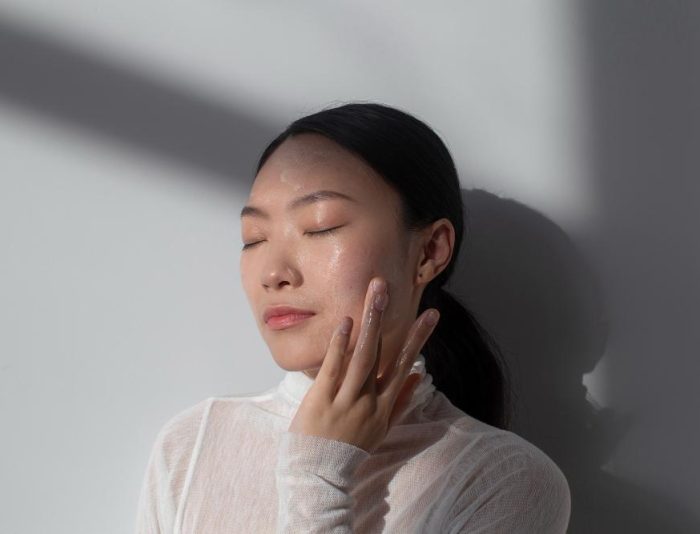
There is a particular kind of skin day many of us know well.
You wake up, look in the mirror, and before the day has even begun, something already feels off. The skin may look more inflamed, more reactive, more congested, or more tired than usual. The face may look puffier, duller, or somehow less like you. And as much as we may not want to admit it, it can change the way we move through the day.
What I’ve come to realise, both as a doctor and as a woman, is that skin is rarely just skin. There were periods in my own life where no matter how well I ate, what products I used, or how much I understood skin biology, my skin still seemed to fluctuate. More and more frustrating “bad days” with no clear triggers I can work on.
And science now tells us there’s a real biological reason for this.
The Mind-Skin Axis: One Continuous Conversation
Your skin and brain are deeply connected through what’s known as the mind-skin axis.
In fact, the skin, gut and brain originate from the same embryological layer — the ectoderm.
They are designed to constantly communicate throughout life through the nervous system, hormone signalling, immune pathways, and even the microbiome.
When we live in a prolonged stress state, the brain activates the HPA (hypothalamic–pituitary–adrenal) axis, and releases stress mediators like cortisol and adrenaline.
These signals don’t stay in the brain.
They directly affect the skin:
- heightening inflammation and altered skin microbiome → acne, eczema, rosacea, seborrheic dermatitis flares
- impairing barrier repair → sensitivity, dryness, poor healing
- altering oil production → acne, enlarged pores, dullness
- reducing microcirculation and accelerating collagen breakdown → dullness, slower regeneration, skin aging
This is why stress can worsen existing skin conditions, or simply make the skin look and behave less resilient than usual. These are not just skin problems. They are signals of a system under strain.
What is also important is that the communication goes both ways. The skin has its own local stress-response system. When the skin is inflamed, irritated, damaged by UV exposure, or chronically reactive, it can send distress signals back to the brain. The brain may then interpret these signals as another form of internal stress. This creates a loop: stress affects the skin, and distressed skin can reinforce stress.
You’re not imagining that connection. You’re living inside a very real biological conversation.
The more I practise medicine, the more I see that healthy skin is not only about suppressing symptoms or correcting what we see on the surface. It is about understanding the system beneath it: the nervous system, sleep, inflammation, gut health, hormones, mitochondria, and emotional wellbeing. Because sometimes the skin is not the main problem. Sometimes it’s just the messenger.