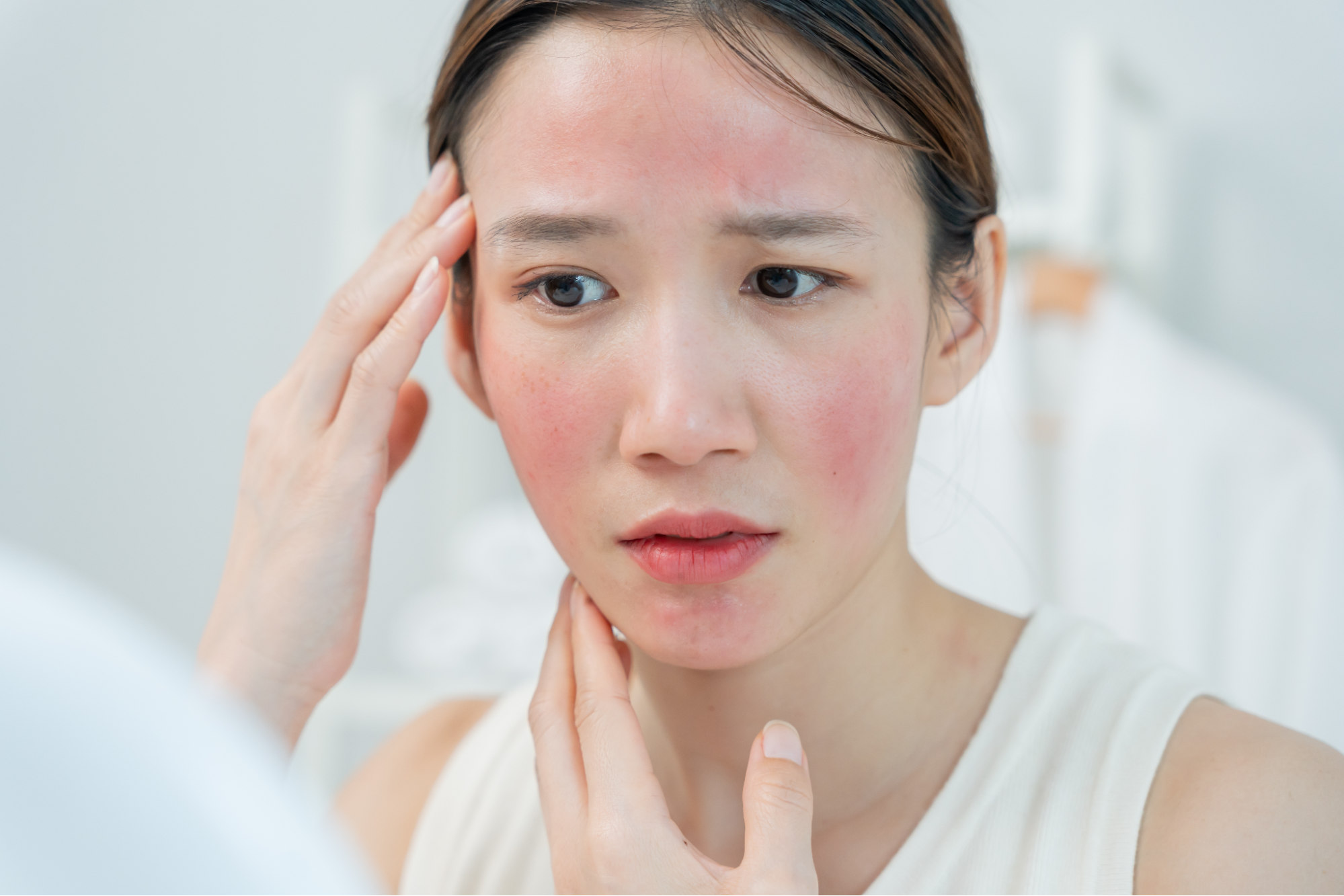
Some faces answer before you even speak. A change in temperature, a sip of wine, a stressful meeting, and the flush arrives on its own schedule. For many people, this is not an occasional blush. It is a conversation their skin insists on having, again and again.
They are not identical, but they often overlap. Think of them as points on a single spectrum rather than separate boxes. And treating them as one can make matters worse. This guide looks at what is actually happening beneath a red or reactive complexion, what tends to trigger it, and why calming the skin usually needs to come before anything else.
The Difference Between a Flush, Sensitivity and Rosacea
A flushed face is not one single thing. At a glance, the three tend to differ like this:
Type What it looks like Common triggers What it usually needs Flush Passing redness that fades within the hour Heat, exercise, alcohol, a rush of emotion Time Sensitivity Stinging, tightness or redness on contact New products, sun, changes in weather Gentler handling Rosacea More frequent, more visible, sometimes with small broken vessels Heat, sun, spicy food, alcohol, stress A doctor’s assessment The mildest and most fleeting of the three is a simple flush: a passing response to heat, exercise, alcohol or a rush of emotion that fades again within the hour once the trigger settles. Reactive sensitivity tends to follow a similar pattern but lingers longer, showing up as stinging, tightness or redness whenever skin meets a new product, sun, or a change in weather. When this reactivity becomes more persistent still, facial flushing that lasts longer, grows more visible, or is joined by small broken vessels can signal that skin is moving into rosacea territory.
These three sit on a single spectrum rather than in separate boxes, which is why telling them apart matters: each responds differently to care. A passing flush usually needs nothing more than time, while sensitivity calls for gentler handling as skin settles. Rosacea sits further along still, and because it is a chronic condition, it benefits from a doctor’s guidance rather than trial and error. Locating where your own skin currently sits is a more useful starting point than trying to name it yourself.
What’s Actually Happening in Reddened Skin
So what causes a flushed face to begin with? Underneath the colour, two things are usually at play: a compromised skin barrier and blood vessels that react more readily than they should. When the barrier’s outer layer is weakened by over-exfoliation, harsh actives, or ongoing environmental stress, it loses some of its ability to protect what lies beneath. Irritants penetrate more easily, and the skin’s own defence response shows up as heat and colour.
At the same time, the small blood vessels near the surface can become more reactive, dilating in response to triggers that would barely register on calmer skin. That is the meaning behind a flushed face that keeps returning: rarely a surface colour issue, and usually a sign that skin is working harder than it should just to protect itself. The redness is the visible evidence of that effort.
The Triggers That Keep Skin Red
Once skin is prone to flushing, certain conditions make it worse. Heat and humidity are common culprits, and Singapore’s climate does reactive skin no favours. Moving repeatedly between air-conditioned interiors and tropical heat keeps blood vessels constantly adjusting, which can leave a face perpetually pink.
Sun exposure, spicy food and alcohol all trigger a similar vascular response, dilating vessels and bringing blood closer to the surface. Stress works differently but arrives at a similar result, prompting hormonal shifts that heighten skin’s sensitivity to everything else. Skincare routines built around several active ingredients, layered without enough recovery time between them, can compound all of the above by weakening the barrier further.
These triggers are not always avoidable, and they do not need to be. Understanding which ones apply to your own skin is what allows a more considered response, rather than reacting to the redness each time it appears.
Why Calming the Barrier Comes First
It is tempting to treat red, reactive skin the way more resilient skin is treated, layering on actives to correct texture or tone. For already-compromised skin, this often makes things worse. Aggressive treatment adds another stressor to a barrier that is already struggling, and the redness tends to deepen rather than resolve.
The more effective approach begins with calming, not correcting. This means supporting the skin’s natural barrier function, reducing unnecessary irritation, and giving reactive vessels less to respond to. Once the barrier is more stable, skin becomes better equipped to tolerate whatever it may eventually need for tone, texture or other concerns. Once the barrier is stable, your skin becomes better equipped to tolerate treatments for tone, texture, or visible vessels (if they are still needed).
When Redness Needs a Doctor’s Eye
Occasional flushing rarely needs more than time and gentler habits. Certain signs are worth a professional assessment rather than continued guessing. Redness that persists most of the day, visible small vessels across the cheeks or nose, or breakouts accompanying the redness can point towards rosacea or another underlying pattern.
Skin that reacts to almost everything, including products that once worked well, is also worth discussing with a doctor. A personalised assessment can identify what is actually driving the redness, rather than working through possibilities one product at a time. Understanding the cause is what makes the next step, whatever it turns out to be, worth taking.
Frequently Asked Questions
Can sensitive skin be cured?
Sensitive skin is usually a state rather than a permanent condition. With consistent barrier support and fewer unnecessary triggers, many people find their skin becomes noticeably calmer and more resilient over time, even if some sensitivity remains part of their baseline.
Why does my face look flushed and red for no reason?
A flushed face often has a reason, even when it is not obvious. Heat, stress, hormonal shifts, certain foods, or a weakened barrier can all trigger flushing without an immediately visible cause. Tracking patterns over a week or two often reveals a trigger that was there all along.
Is rosacea permanent?
Rosacea is a chronic condition, meaning it tends to persist over time rather than resolve completely. It can, however, be well managed. With the right combination of trigger awareness, barrier support and professional guidance, flare-ups can become less frequent and less severe.
Calm the Source, Not Just the Symptom
Lasting calm rarely comes from treating redness as it appears. It comes from understanding what is triggering it in the first place, and giving the barrier the support it needs to stop overreacting. This is often where a personalised assessment makes the difference between guessing and actually knowing.
Moyem is a personalised aesthetic clinic in Singapore that looks at the whole picture behind a skin concern, not just what is visible on the surface. If dehydration is part of what keeps your skin reactive, a hydration facial treatment can help restore the barrier’s ability to hold moisture. For more persistent redness and sensitivity, our approach begins with identifying the cause before recommending any next step.
If your skin has been telling you something for a while, we are glad to listen and help you understand what it is trying to say.


Hugs,

DR. TAN WANG THENG